Nguni's Story
SPECIES
White Rhino
DATE OF ADMISSION
28th February 2026
ESTIMATED AGE ON ARRIVAL
6-8 months
REASON FOR ADMISSION
Orphaned – mother poached
FROM
Malalane, KNP
FRIENDS
Abby
CURRENT STATUS
New Arrival
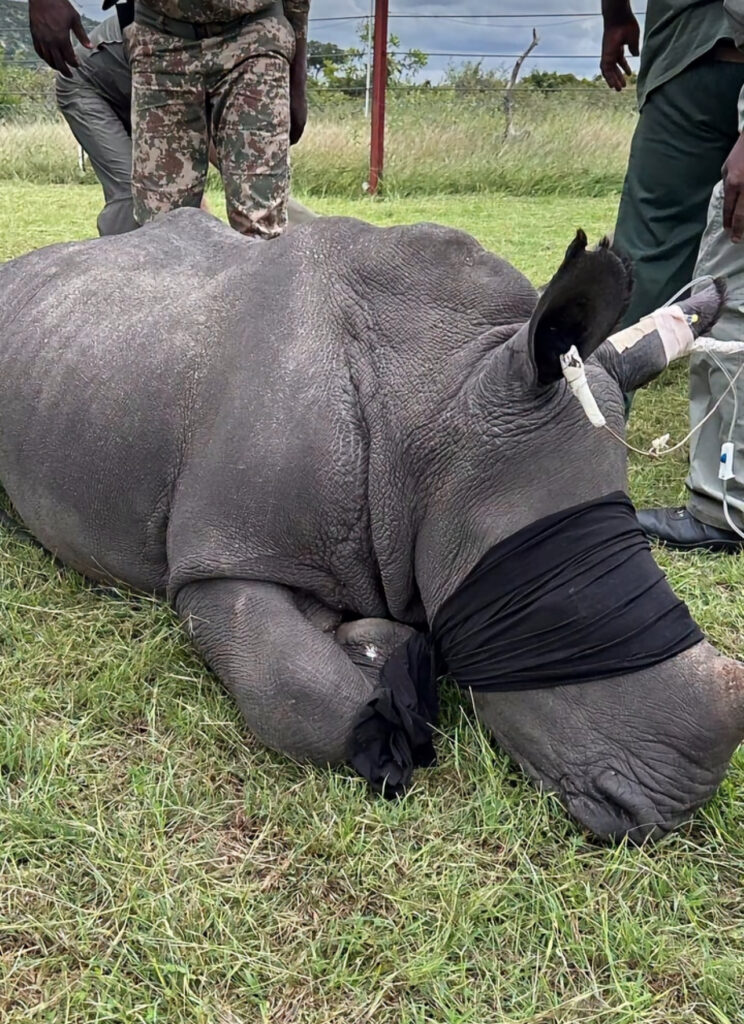
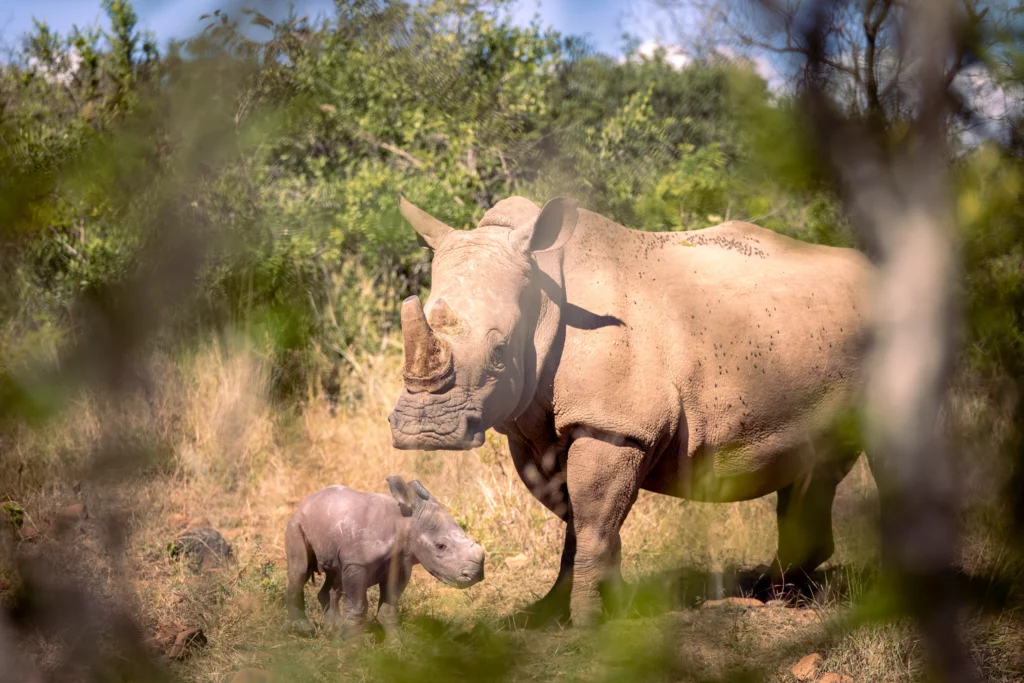
In the early hours of 28th February 2026, an urgent call came through from Kruger National Park. Rangers from the Jock Environmental Monitoring Unit (JEMU) had located two young male rhino calves alone in the bush.
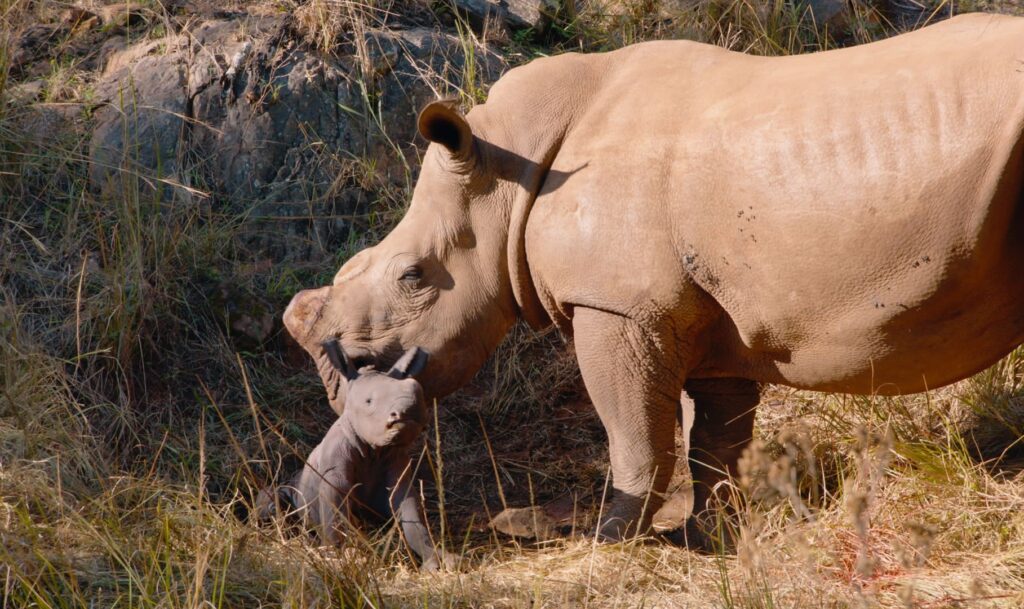
Estimated to be just 6–8 months and 12–14 months old, the calves were far too young to be surviving without their mothers. One of the calves showed visible injuries. Whether their mothers had fallen victim to poaching or whether the calves had been separated and pushed away by a dominant bull remained unclear. What was certain, however, was that neither calf would survive for long alone.
In the absence of their mothers, the two youngsters had found comfort in one another.
What followed was a carefully coordinated rescue operation involving SANParks, JEMU, veterinary teams, pilots, and Care for Wild Rhino Sanctuary. The terrain proved challenging, with one of the calves moving into an area inaccessible by vehicle. A decision was made to airlift the younger calf, later named Nguni.
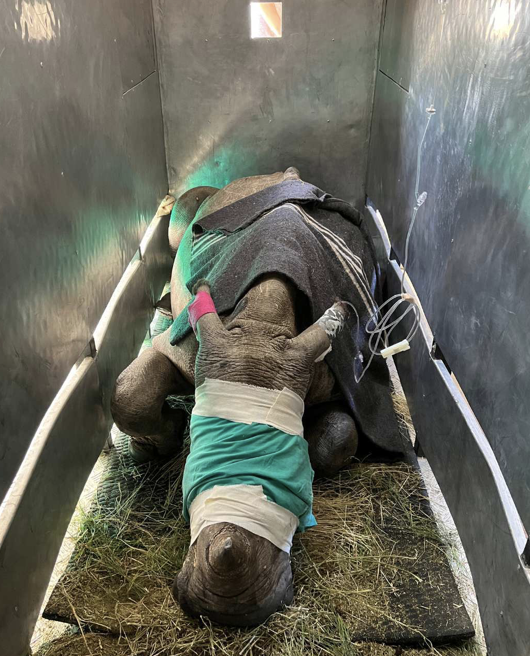
Suspended safely beneath the helicopter, Nguni was transported to Care for Wild, while the older calf, Wagyu, was recovered by the ground team, placed on intravenous fluids, and transported by trailer.
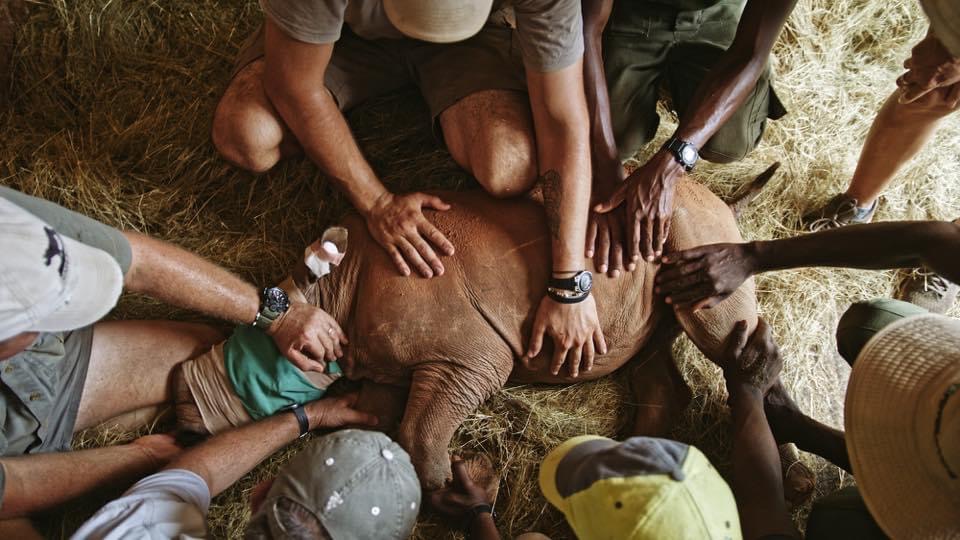
At 16:21, Nguni arrived at Care for Wild and was carefully lowered from the helicopter onto a waiting recovery vehicle. An immediate veterinary assessment was conducted before he was transferred to the Juvenile High Care Unit for observation and treatment. Wagyu arrived shortly afterwards.
Within an hour, the two calves were reunited and they recognised one another immediately. The relief was unmistakable. After facing the uncertainty of the wild together, they once again found comfort in each other's presence. That companionship would prove to be one of the most important parts of their recovery.
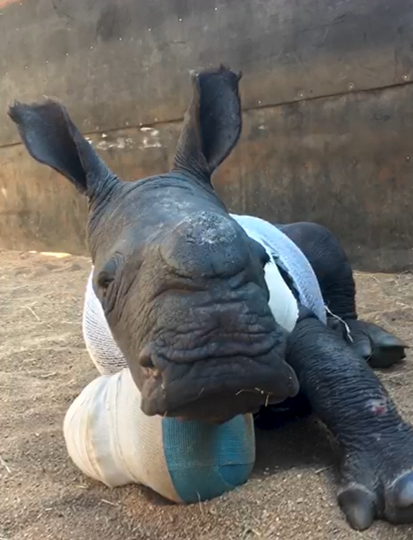
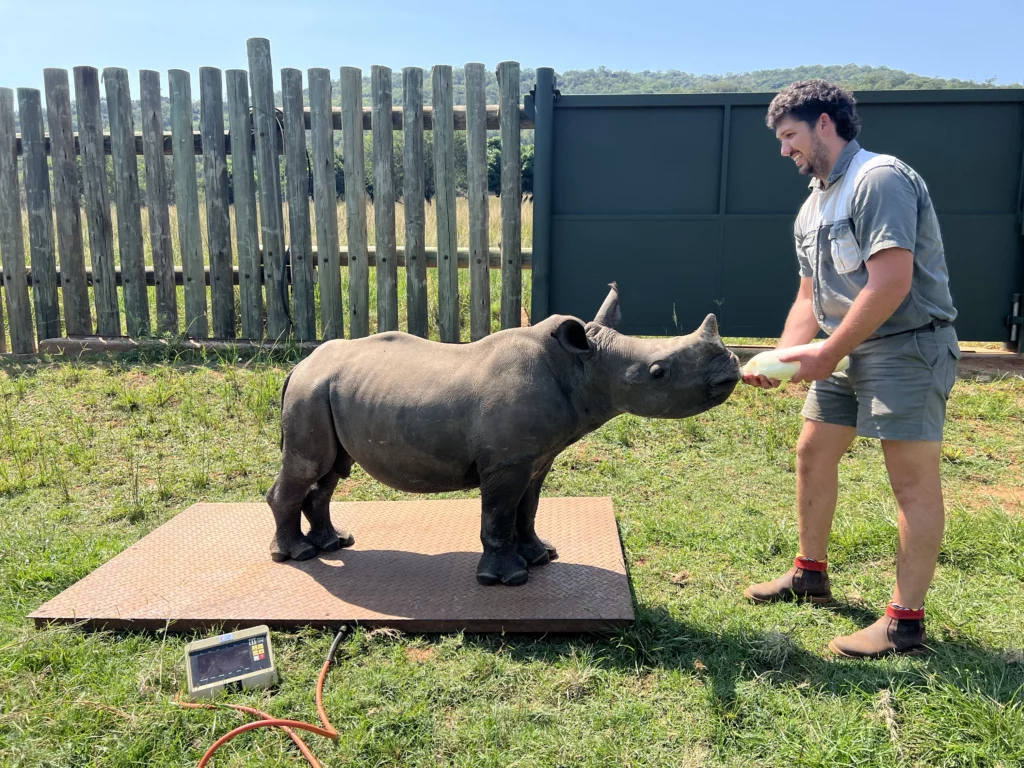
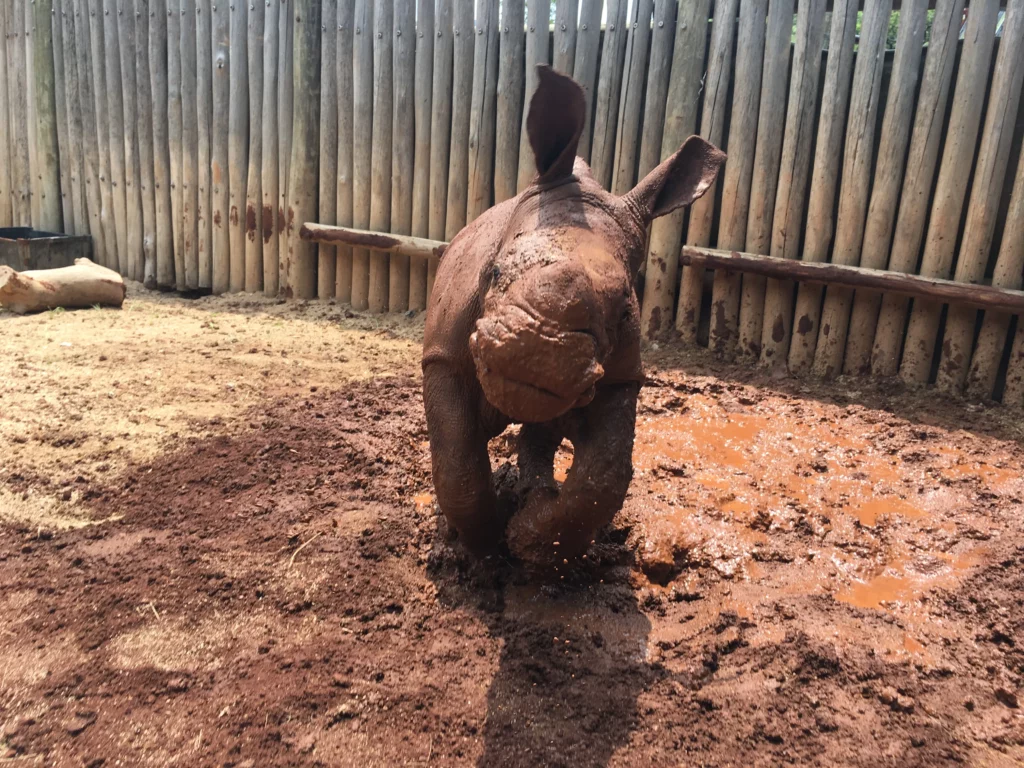
Nguni adapted remarkably quickly to his new surroundings. He readily accepted a bottle, settled into his routine, and responded positively to his caregivers. Wagyu's journey was more difficult. It soon became clear that he had endured the greater physical and emotional burden while the pair were alone in the bush. His injuries required intensive treatment, and the hidden effects of trauma left him struggling to eat, rest, and regain his strength. Throughout it all, Nguni remained close by, providing the familiarity and reassurance that only another rhino could offer. Sadly Wagyu passed away from his injuries and Nguni was again alone.
But in a strange twist of fate, the day before Wagyu passed away, another orphan arrived at Care for Wild. A young female calf, later named Abby, was rescued and brought into rehabilitation. After losing Wagyu, Nguni began calling Abby from the boma next door.They called softly to each other and quickly formed a close bond.
For orphaned rhino calves, these relationships are incredibly important. While caregivers provide specialised veterinary treatment, nutrition, and round-the-clock support, companionship from their own species offers something equally valuable: emotional security. These friendships help reduce stress, encourage confidence, and allow young rhinos to develop the natural social behaviours they will need throughout their lives.
Today, Nguni continues his rehabilitation journey alongside Abby. Together they spend their days learning, growing, and healing. Their story is a reminder that recovery is not only about physical survival. Sometimes it is the bonds formed after loss that become the foundation for a future.
Adopt a rhino. Become part of their story.
Rhino adoption is one of the most personal ways to support Care for Wild. Your adoption helps provide ongoing support while giving you a meaningful connection to an individual rhino’s journey.
Whether you adopt for yourself, your family, your classroom, your company or as a gift, you become part of a rhino’s incredible journey.
Rhino Adoption Benefits
Each adopter will receive:
Adoption contributions support all aspects of the care and protection of rhinos at Care for Wild Rhino Sanctuary.
Meet the rhinos and discover their incredible stories
Every rhino has a name. Every name tells a story. Behind each rescue is a journey from loss to life, marked by trauma, healing, trust, recovery, and hope.
 New Arrival
 Rewilding and Release
 Rewilding and Release
 Rewilding and Release
 New Arrival
 Rehabilitation
 Rewilding and Release
 New Arrival
 Rewilding and Release
 Rewilding and Release
 Rehabilitation
 Rewilding and Release
 Rewilding and Release
 Rewilding and Release
 Rewilding and Release
 Rewilding and Release
 Rewilding and Release
 Rewilding and Release
 New Arrival
 Rewilding and Release
Adopt a Rhino
Your adoption supports the daily care, food and protection of your rhino.
Where your adoption goes
Your contribution directly funds your rhino's daily care:
- Food, milk formula and supplements
- Veterinary treatment and medicine
- 24/7 anti-poaching protection
- Safe rehabilitation and rewilding
Meet
Get sanctuary updates, rhino stories and meaningful ways to help, delivered to your inbox.
Unsubscribe at any time. Privacy Policy.
