Rehabilitation is a journey of patience, trust and care.
Rhino rehabilitation is a long-term commitment. Rhinos are an ancient species, perfectly adapted through millions of years of evolution. Every stage of rehabilitation is designed to help orphaned or injured rhinos rediscover the behaviours and instincts they need to survive and thrive in the wild.
Specialist Care. Purpose-Built Facilities. Structured Rehabilitation. Preparation for Rewilding & Release.
Specialist Rehabilitation Built on Years of Experience
Rehabilitation cannot be rushed. There is no formula, no fixed timeline and no shortcuts. Every orphaned or injured rhino is extremely compromised and follows its own journey, with care tailored to its age, condition, personality and stage of development.
As the world’s largest orphaned rhino sanctuary, Care for Wild has developed and continues to refine one of the most advanced rhino rehabilitation and care programmes in existence. Caring for orphaned and injured rhinos is a highly specialised field that has evolved through decades of hands-on experience. Every rehabilitation protocol, facility and management decision is guided by an ever-growing understanding of rhino biology, behaviour, nutrition, psychology and welfare.
Every rhino receives an individual rehabilitation plan that adapts as it grows and its needs change. Some calves require weeks of intensive medical treatment before they are strong enough to stand on their own. Others spend many months bottle feeding, learning to browse and graze, developing social bonds with other rhinos and gradually regaining the confidence and natural behaviours essential for life in the wild.
The goal is never simply to raise a rhino. It is to return a healthy, independent rhino to its natural habitat. Every decision, every milestone and every stage of rehabilitation is designed with rewilding and release in mind.
Years of dedication leads to extraordinary moments: rhinos thriving independently, making home ranges, raising calves of their own and fulfilling the role nature spent millions of years perfecting.
Rehabilitation Journey
Intensive Care & Stabilisation
The youngest and most vulnerable rhinos are admitted to Care for Wild's purpose-built Intensive Care Unit (ICU), where every aspect of their condition is assessed and continuously monitored. Is the calf drinking? Can it digest its milk? Is it maintaining its body temperature? Is it urinating and defecating normally? Is it dehydrated? Is there muscle weakness, injuries, hidden trauma or signs of infection?
Drawing on decades of rehabilitation experience, the veterinary and caregiver teams develop an individual treatment plan for every rhino. Feeding intervals, fluid therapy, medication, pain management and wound care are continually adapted as the rhino responds. Every decision is guided by careful observation because even the smallest change can indicate whether a calf is improving or beginning to struggle.
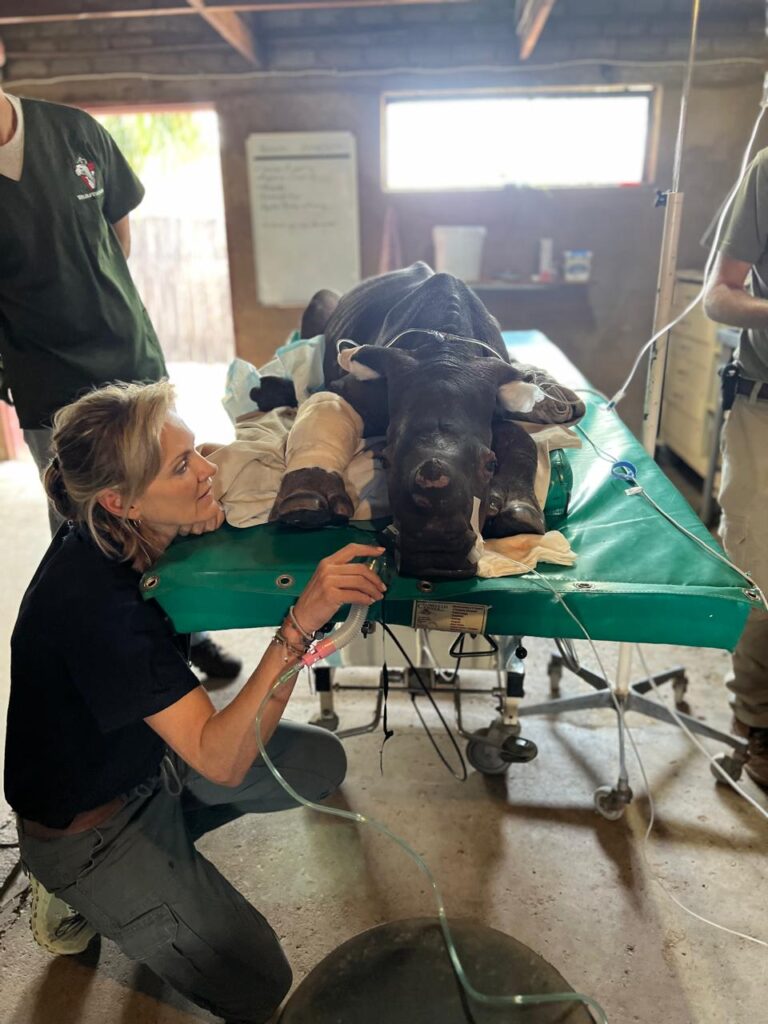
When advanced diagnostics or specialised procedures are required, rhinos are admitted to Care for Wild's purpose-built Rhino & Wildlife Clinic. Equipped with in-house blood analysers, digital X-ray, ultrasound and a dedicated treatment and procedure room, the clinic enables rapid diagnosis and immediate veterinary intervention, ensuring critical decisions can be made without delay.
Not every patient is an orphaned calf. Injured and sick adult rhinos are cared for in the purpose-built Adult Rhino Treatment & Care Facility, specifically designed to safely accommodate adult animals requiring intensive treatment, ongoing monitoring and rehabilitation. Together, these specialist facilities provide Care for Wild with the capability to deliver world-class care at every stage of a rhino's recovery.
Specialist Nutrition & Early Development
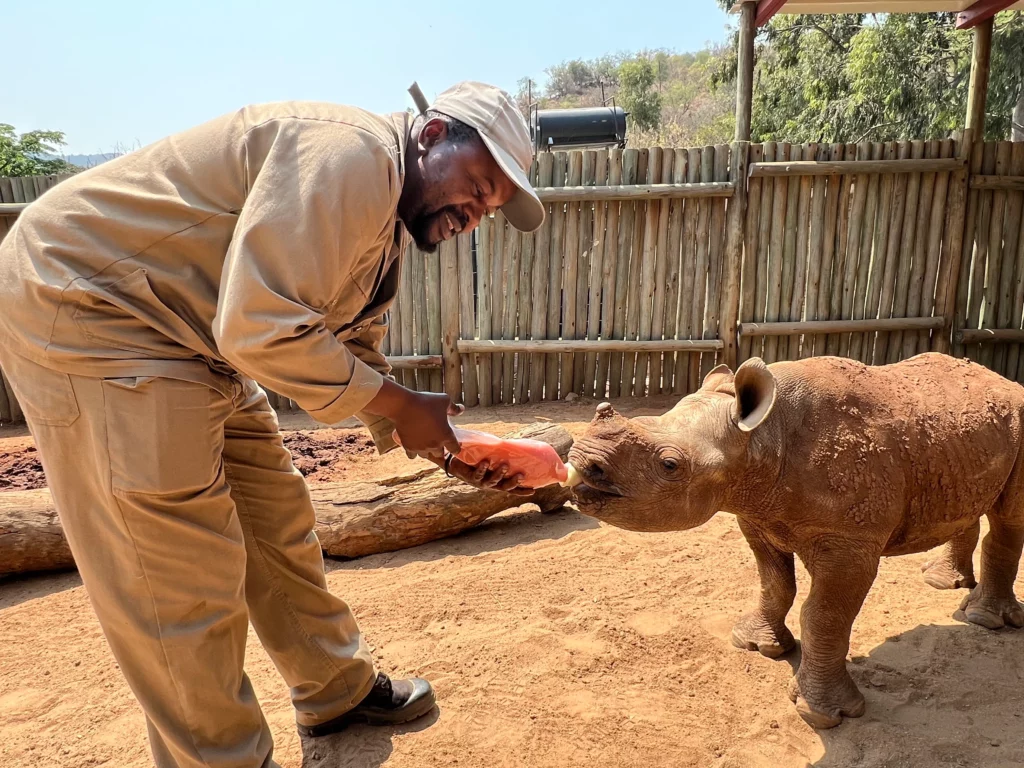
For the first 18 to 20 months of life, orphaned rhinos rely on specialist milk formula to replace the nourishment they would have received from their mothers. Rhino calves consume up to 16-18 litres every day, with carefully managed feeding schedules tailored to their age, size and development.
As the calves grow stronger, milk is gradually reduced while natural feeding behaviours are encouraged. White rhinos are introduced to grazing, while black rhinos are taught and encouraged to browse on a wide variety of natural vegetation, reflecting the very different diets they will depend on in the wild. Every nutritional decision supports healthy growth while preparing each rhino for independence.
Building Strength & Independence
As medical intervention becomes less intensive, rhinos move to larger rehabilitation bomas (holding facilities) and camps. Here, rehabilitation shifts from simply keeping a rhino alive to preparing it for life in the wild. Every calf follows an individual rehabilitation programme, with continual monitoring of body condition, weight gain, muscle development, appetite and nutrition, and overall health. As strength and confidence improve, the rhinos spend increasing amounts of time in larger, more natural environments where they begin developing the independence needed for rewilding.
Learning to be a Rhino
One of the most important lessons Care for Wild has learnt is that rhinos teach rhinos.
Introducing suitable companions is carefully planned. Every interaction is monitored. Does the rhino continue eating and drinking? Is it playful, inquisitive and beginning to communicate with other rhinos? Does it remain anxious and hyper-vigilant, or is it gradually leaving the constant state of fight or flight that many orphaned rhinos experience?
Purpose-built night pens equipped with camera systems allow the rehabilitation team to observe these behaviours without human presence influencing the rhinos' natural interactions. This unbiased behavioural monitoring provides invaluable insight into social development, confidence, hierarchy and emotional wellbeing, allowing rehabilitation plans to be continually refined as each rhino progresses.
Years of experience have shown that strong social bonds provide comfort, confidence and opportunities to learn the behaviours that no human can ever teach.
Preparing for Rewilding
As confidence grows, human interaction is gradually reduced while time spent in larger camps and the natural veld steadily increases.
The rehabilitation team continually evaluates every aspect of the rhino's development. Is it grazing or browsing naturally? Is it gaining weight and developing good muscle tone? Is it moving confidently and navigating its environment independently? Is it well integrated within its crash? Can it cope with changing weather, new environments and increasing independence?
Only when the team is confident that the rhino is physically healthy, emotionally resilient, socially established and displaying the behaviours expected of a wild rhino is it considered ready for rewilding.
Successful rehabilitation is not determined by time. It is determined by the rhino.
What Rehabilitation Support Helps Fund
- Medical equipment and monitoring devices
- Blood tests and laboratory consumables
- ICU bedding, heating and hygiene consumables
- Specialist milk formula
- Supplementary feed & nutritional support
- Cleaning supplies
- Maintenance & upkeep of rehabilitation facilities
- Camera systems & monitoring equipment
- Habitat maintenance & fence infrastructure
Rhino rehabilitation is only possible because people from around the world choose to support different parts of the journey. Whatever you are able to give, your donation directly contributes to the specialist rehabilitation and care that orphaned and injured rhinos depend on.
From trauma to trust
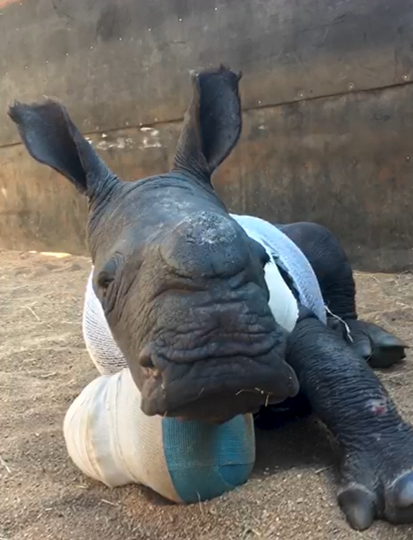
Each rhino’s rehabilitation journey is different. Some arrive frightened and defensive. Others arrive weak, injured or deeply dependent. Over time, with care and patience, their strength begins to return.
 Rewilding and Release
 New Arrival
 Rehabilitation
 Rehabilitation
Adopt a Rhino
Your adoption supports the daily care, food and protection of your rhino.
Where your adoption goes
Your contribution directly funds your rhino's daily care:
- Food, milk formula and supplements
- Veterinary treatment and medicine
- 24/7 anti-poaching protection
- Safe rehabilitation and rewilding
Meet
Help support their journey to recovery.
The success of rhino rehabilitation is built on continuous commitment, enormous dedication and deep rooted passion. It takes specialist expertise, endless patience and incredible heart from a team that never gives up on giving every rhino the best possible chance of returning to the wild.
