Rewilding Rhinos & Rebuilding Wild Populations.
Rewilding and release transforms rescue into conservation. Every rhino returned to the wild strengthens South Africa’s rhino population, restores a vital ecosystem engineer and helps conserve and protect biodiversity.
Healthy rhinos in healthy ecosystems.
A World-Leading Rhino Rewilding & Release Programme
Rewilding is the culmination of years of careful planning, dedicated care and long-term commitment. Care for Wild has developed one of the world’s most comprehensive rhino rewilding programmes, preparing rehabilitated rhinos to return to secure, protected landscapes where they can establish territories, breed naturally and strengthen South Africa’s wild rhino population.
But successful rewilding extends far beyond returning rhinos to the wild. It is about restoring one of Africa’s most important ecosystem engineers to the landscapes with which they evolved, allowing natural ecological processes to function once again.
By returning rhinos to protected ecosystems, they help restore the ecological processes that support biodiversity, strengthen ecosystem resilience and sustain the health of the landscapes on which wildlife, people and the natural world all depend.
Restoring rhino populations. Rewilding South Africa. Conserving Biodiversity.
The Path to Independence
Rewilding is not a single event but a carefully managed journey. The goal is not simply to release a rhino, but to support its successful adaptation to life in the wild, where it can live independently, contribute to a healthy population and once again fulfil its ecological role.
A wild rhino is shaped by years of learning from its mother and the other rhinos around it. From an early age, calves learn where to find food and water as the seasons change, which plants to browse and grasses to graze, how to navigate unfamiliar landscapes, recognise potential threats and understand the social behaviour of other rhinos. These experiences gradually prepare them for an independent life.
An orphan must learn these same lessons without its mother.
Learning to Live in the Wild
As rhinos enter the rewilding phase, they move into increasingly larger protected landscapes where they begin making more and more decisions for themselves. Every day brings new experiences. They spend their time exploring, browsing, grazing, locating water sources and becoming familiar with the landscape around them. As the seasons change, they naturally learn how food availability, weather and the environment influence their movements and behaviour.
Equally important are the lessons they learn from one another. As they mature, social dynamics continue to evolve. Young bulls begin testing boundaries and encountering dominant males, gradually learning the behaviours that establish hierarchy, define territories and minimise unnecessary conflict. Through these interactions, they learn when to challenge, when to retreat and how to coexist within a landscape occupied by other bulls.
Females develop stable home ranges and gradually become part of the wider social network of neighbouring cows and their calves creating the stable social environment into which future calves are born.
These are lessons that cannot be taught by people. They develop only through experience, observation and time spent living alongside other rhinos. Understanding when to intervene and, more importantly, when to quietly step back has become one of the greatest lessons Care for Wild has learnt through more than a decade of rewilding rhinos.
Learning to Live in the Wild
As rhinos enter the rewilding phase, they move into increasingly larger protected landscapes where they begin making more and more decisions for themselves. Every day brings new experiences. They spend their time exploring, browsing, grazing, locating water sources and becoming familiar with the landscape around them. As the seasons change, they naturally learn how food availability, weather and the environment influence their movements and behaviour.
Equally important are the lessons they learn from one another. As they mature, social dynamics continue to evolve. Young bulls begin testing boundaries and encountering dominant males, gradually learning the behaviours that establish hierarchy, define territories and minimise unnecessary conflict. Through these interactions they learn when to challenge, when to retreat and how to coexist within a landscape occupied by other bulls.
Females develop stable home ranges and gradually become part of the wider social network of neighbouring cows and their calves creating the stable social environment into which future calves are born.
These are lessons that cannot be taught by people. They develop only through experience, observation and time spent living alongside other rhinos. Understanding when to intervene and, more importantly, when to quietly step back has become one of the greatest lessons Care for Wild has learnt through more than a decade of rewilding rhinos.
Building Self-Sustaining Populations
The ultimate purpose of rewilding is not simply to release rhinos. It is to establish healthy, self-sustaining wild populations.
True conservation success is measured years after release, when rehabilitated rhinos begin having calves of their own. Every wild-born calf represents far more
than the birth of another rhino. It represents hope for the species. It is evidence that an orphaned calf, once entirely dependent on human care, has successfully reclaimed its place within the natural landscapes it once belonged to.
Natural reproduction is essential to the long-term recovery of the species. Every calf born in the wild strengthens genetic diversity and as these populations expand and successive generations are born entirely in the wild, orphaned rhinos become an increasingly important part of rebuilding South Africa’s national wild rhino population.
This is the true measure of successful rewilding, not simply releasing rhinos, but restoring the natural cycle of life that ensures the species can survive for generations to come.
Long-Term Monitoring
Every rhino continues to be monitored and protected even after being rewilded and released. All enabled tracking collars and tablets are also used to collect valuable data and insights. Dedicated Rhino Monitors quietly observe each rhino’s behaviour, body condition, habitat use, movement patterns and social interactions.
They monitor how individuals establish territories, utilise different habitats, respond to changing environmental conditions and, over time, contribute to the wider population. These observations continue over many years, creating one of the most comprehensive long-term records of post-release rhino behaviour and adaptation.
Their role is to monitor, to protect, and to understand, always collecting data. By remaining largely unseen, Rhino Monitors allow natural behaviours to develop while providing the information needed to identify concerns early, guide adaptive management and continually refine Care for Wild’s rewilding programme.
Every observation contributes to a deeper understanding of how orphaned rhinos adapt to life in the wild. The knowledge gained from one generation informs the management of the next, continually improving rewilding processes.
Long-Term Monitoring
Every rhino continues to be monitored and protected even after being rewilded and released. All enabled tracking collars and tablets are also used to collect valuable data and insights. Dedicated Rhino Monitors quietly observe each rhino’s behaviour, body condition, habitat use, movement patterns and social interactions.
They monitor how individuals establish territories, utilise different habitats, respond to changing environmental conditions and, over time, contribute to the wider population. These observations continue over many years, creating one of the most comprehensive long-term records of post-release rhino behaviour and adaptation.
Their role is to monitor, to protect, and to understand, always collecting data. By remaining largely unseen, Rhino Monitors allow natural behaviours to develop while providing the information needed to identify concerns early, guide adaptive management and continually refine Care for Wild’s rewilding programme.
Every observation contributes to a deeper understanding of how orphaned rhinos adapt to life in the wild. The knowledge gained from one generation informs the management of the next, continually improving rewilding processes.
Restoring Ecosystems Through Rewilding
Returning rhinos to the wild is about far more than saving an individual animal. It is about restoring one of Africa’s most important ecosystem engineers to the landscapes that evolved alongside them.
As rhinos graze, browse, create pathways, defecate, disperse seeds and shape vegetation, they influence the structure and health of entire ecosystems. These natural behaviours create opportunities for countless other plants and animals to thrive, restoring ecological processes that strengthen biodiversity, improve ecosystem resilience and support healthier landscapes.
Rewilding rhinos is therefore the first important step in restoring functioning, healthy ecosystems on whch both wildlife and people depend.
A gradual journey towards independence
Rehabilitation Readiness
The rhino must be physically strong, socially stable and behaviourally ready for the next stage.
Group Stability
Where possible, rhinos move through the process with familiar companions or a stable crash, helping reduce stress and support natural behaviour.
Larger Protected Spaces
Rhinos gradually adapt to larger landscapes, new grazing patterns, changing conditions and increased independence.
Monitoring and Support
Even after release, rhinos may need monitoring, supplemental support, habitat management and ongoing protection.
Long-Term Protection
Rewilded rhinos depend on anti-poaching operations, field teams, protected landscapes and conservation management.
New Life
Some rescued rhinos eventually become mothers themselves, continuing the journey from orphaned calf to new life in the wild.
Support the journey back to the wild
Rewilded rhinos continue to need monitoring, protection and ongoing conservation management.
Additional Support Areas
Additional Support Areas
Full Circle Success Stories
Some of the most powerful Care for Wild stories are those that show the full journey from orphaned calf to rewilded rhino, and in many cases, to motherhood.
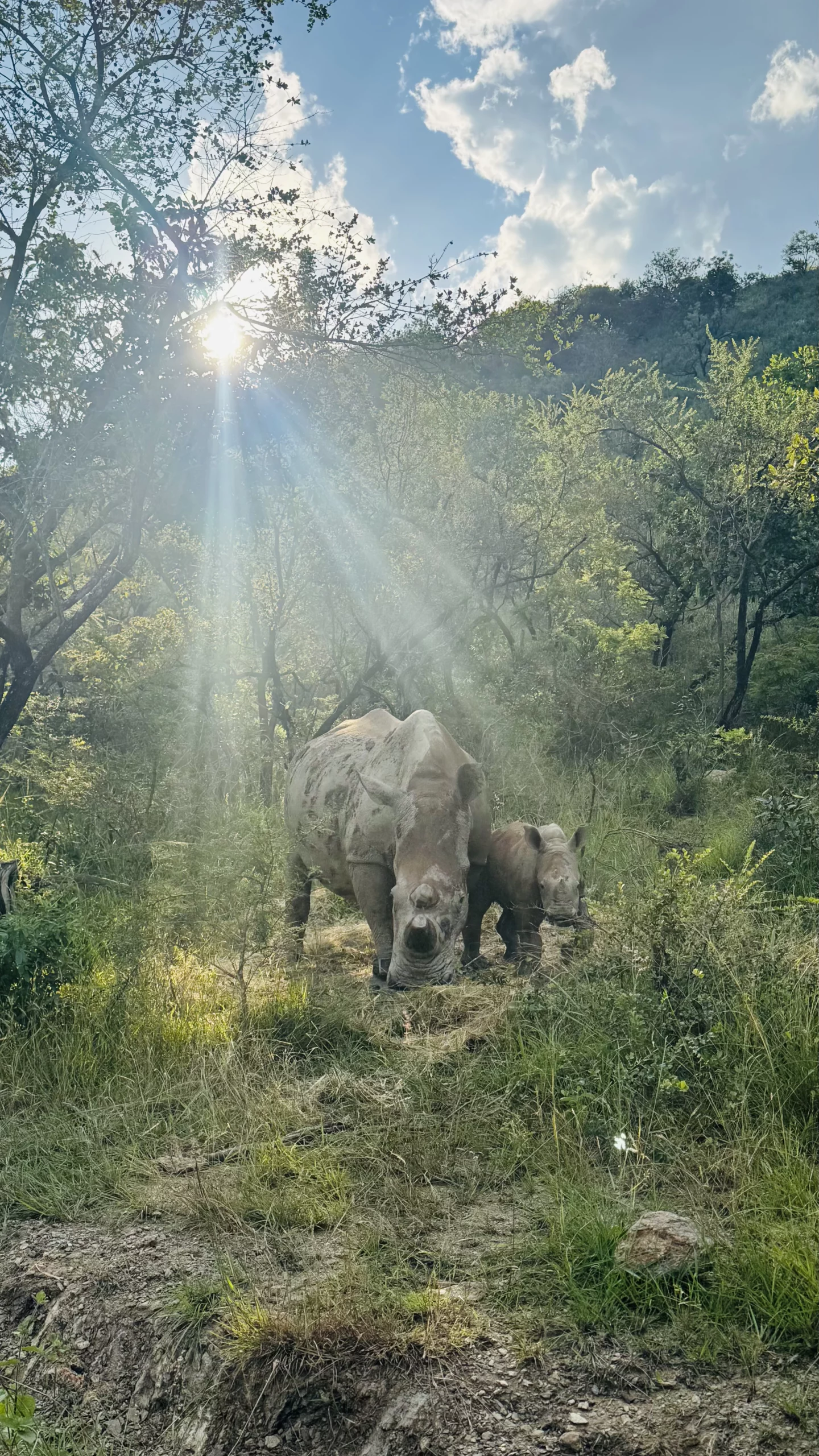
Lilli and Luke
Lilli arrived as an orphaned calf and later became a mother, marking a powerful milestone in her journey.
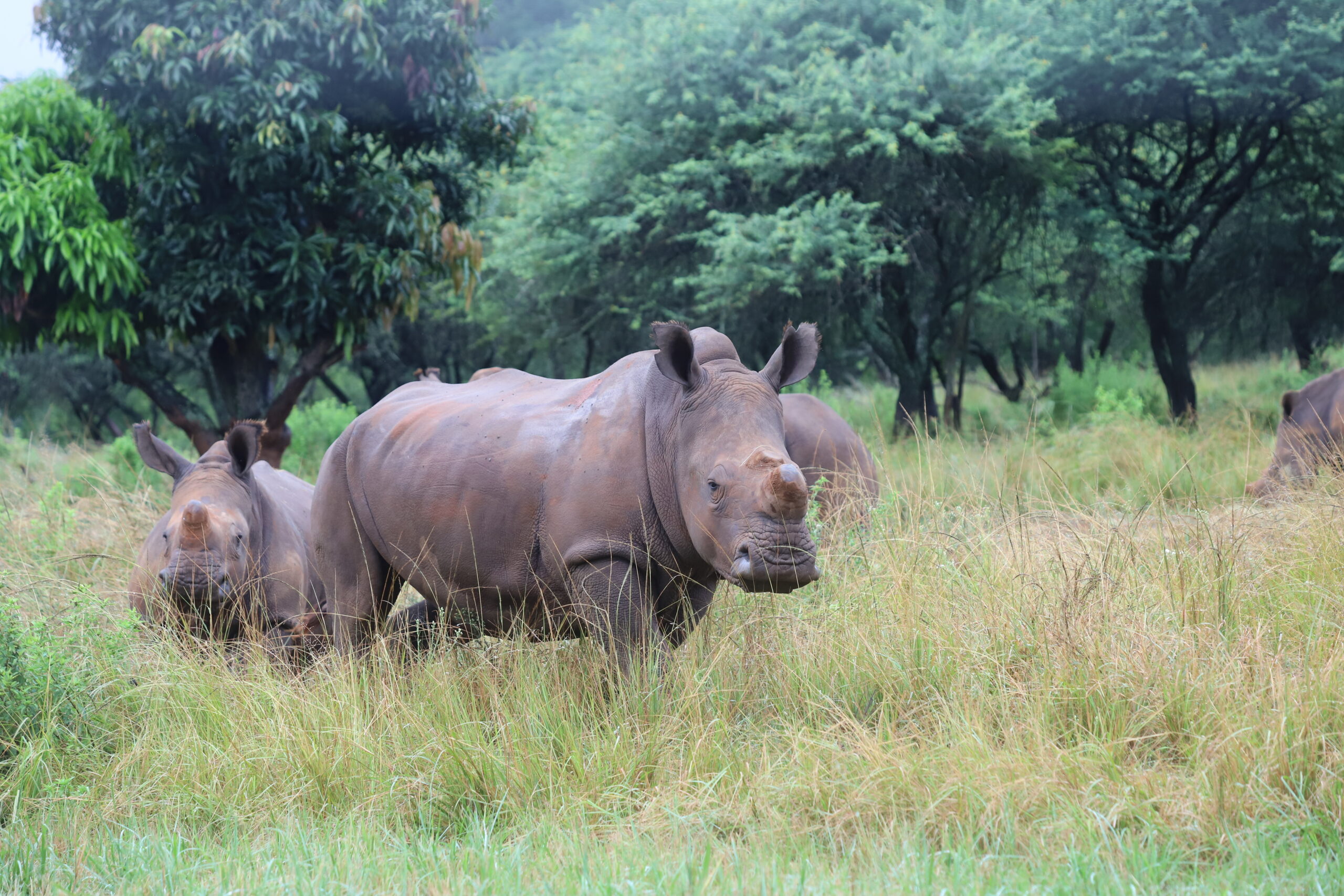
Dianna
Once traumatised and defensive, Dianna now plays a reassuring role for other orphans.

Wyntir
Rescued after losing her mother to poaching and surviving a hyena attack, Wyntir overcame the odds at Care for Wild.

Released Rhinos
Every released rhino represents years of care, monitoring, protection and hope.
Help protect their future
A rescued rhino’s journey is not complete until they have a safe future.
Your support helps Care for Wild provide the monitoring, protection and landscapes needed for rhinos to return to wild spaces.
